
Pomsky: A Detailed Guide to This Unique Dog Breed
Pomskies have quickly become a popular choice among dog lovers due to their striking looks, playful nature, and friendly personalities. As a hybrid breed, the Pomsky is a cross between the Pomeranian and the Siberian Husky, designed to combine the smaller size and affectionate nature of the Pomeranian with the energy and striking appearance of the Siberian Husky. MT Puppy, we will explore all the essential details about the Pomsky breed, including its history, appearance, temperament, grooming needs, health concerns, and much more. Whether you’re considering adopting a Pomsky or simply want to learn more, this guide provides all the information you need.
What is a Pomsky?
A Pomsky is a hybrid or designer dog breed created by crossing a Pomeranian with a Siberian Husky. The aim of breeding these two breeds is to produce a dog that embodies the energy and beautiful appearance of the Husky, but in a smaller, more manageable size, akin to the Pomeranian.
While Pomskies are not officially recognized by major kennel clubs such as the American Kennel Club (AKC), they have gained a significant following due to their attractive looks and playful, loving personalities.
Key Traits of a Pomsky:
-
Size: Pomskies are small to medium-sized dogs, generally weighing between 15 and 30 pounds and standing about 10 to 15 inches tall at the shoulder. The size can vary, depending on whether they inherit more from the Pomeranian or the Husky side.
-
Lifespan: The average lifespan of a Pomsky is between 12 and 15 years.
-
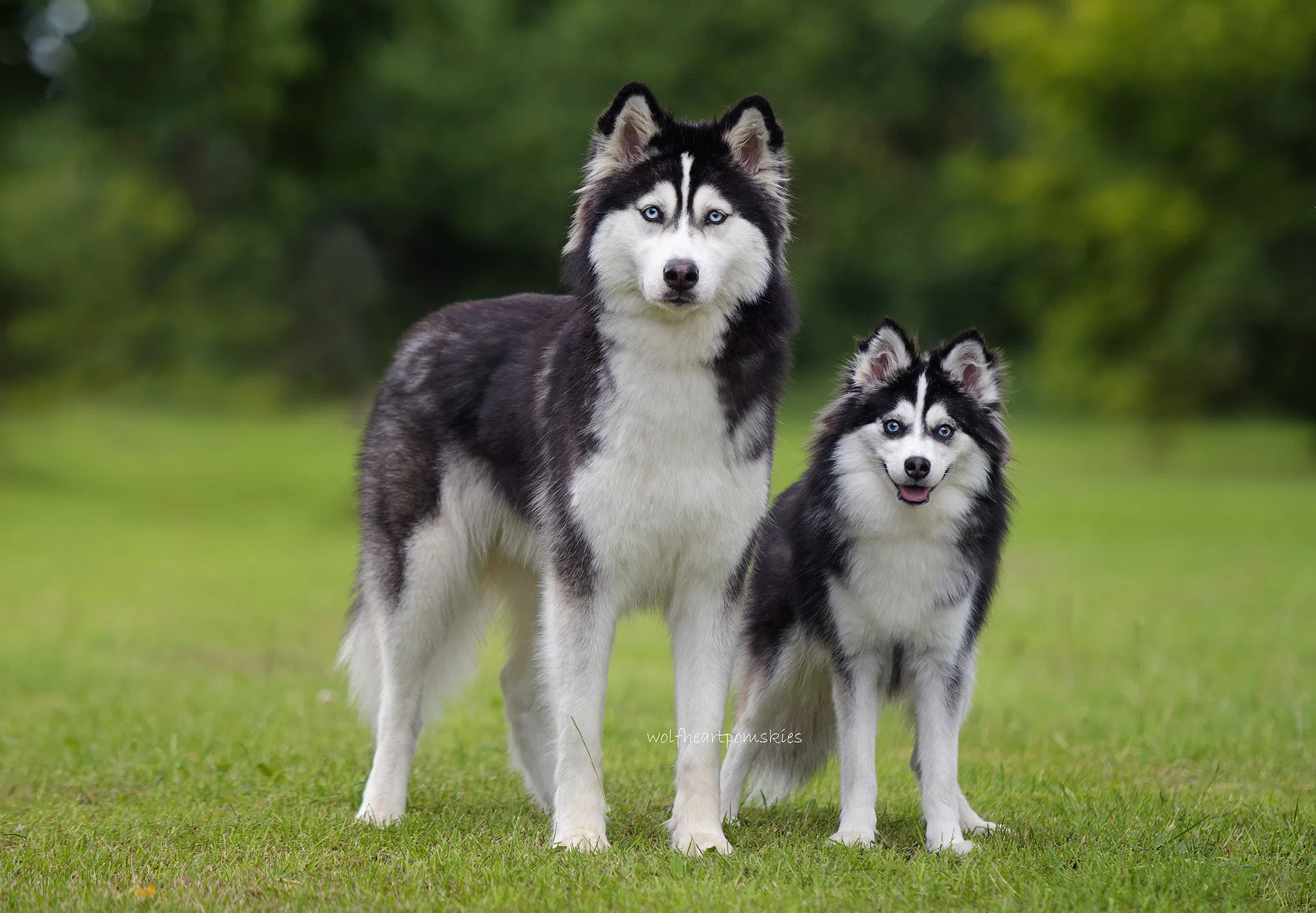
Coat and Colors: Pomskies have a double-layered coat, typically thick and fluffy, inherited from both the Pomeranian and Siberian Husky. They come in a variety of colors, such as black, grey, white, brown, sable, and combinations of these. They may have distinctive markings, such as a mask or face markings resembling those of a Husky. These markings can include “eyebrows,” “spectacles,” or a “bandit mask” around their eyes, which are often darker than the rest of their coat.
-
Eyes: One of the most attractive features of the Pomsky is its eyes. These dogs can inherit the Husky’s striking blue or heterochromatic (two different colored) eyes. However, Pomskies can also have brown, amber, or even green eyes, depending on their genetic inheritance. Some Pomskies may have one eye of each color, which is a common feature in Huskies and a highly desirable trait for many owners.
-
Ears and Tail: Pomskies have small, erect ears that resemble those of their Husky parent. Their tails are typically bushy and curled over their back, again reflecting the Husky’s distinctive features. The tail is thick and plush, making it another of the Pomsky’s visually striking traits.
Temperament and Personality
Pomskies are known for their friendly, intelligent, and affectionate nature. They form strong bonds with their families and are often described as being social and loving. Due to their Husky heritage, they may inherit some of the Husky’s independent and stubborn traits, but they are also highly trainable, especially if they are given plenty of attention and positive reinforcement.
Key Personality Traits:
-
Playful and Energetic: Pomskies have a high energy level, thanks to their Husky genes. They love to play and are very active. Daily walks and playtime are essential for keeping them happy and well-exercised.
-
Affectionate and Loyal: They are typically very affectionate and will enjoy spending time with their families, following you around the house and wanting to be included in family activities.
-
Alert and Intelligent: Pomskies are intelligent dogs that are eager to please, making them relatively easy to train. They are also alert, so they can make good watchdogs, though they are generally not aggressive.
While Pomskies are good with children and other pets, early socialization is crucial to ensure they grow up to be well-rounded dogs. They are best suited for active families or individuals who have the time and energy to keep up with their playful nature.
Exercise and Activity Requirements
Pomskies are a high-energy breed, which means they need a considerable amount of exercise to stay healthy and happy. Their energy levels are inherited from their Husky parent, who was bred for endurance, and their playful nature comes from the Pomeranian side.
Exercise Needs:
-
Daily Walks: Pomskies should be taken on at least one or two walks per day. Walks not only provide physical exercise but also give them a chance to explore the world around them, satisfying their curiosity.
-
Playtime: These dogs enjoy playing games, such as fetch, tug-of-war, or chasing, which helps to burn off excess energy.
-
Mental Stimulation: Because Pomskies are intelligent, mental stimulation is just as important as physical exercise. Puzzle toys, basic training exercises, or agility training can help keep their minds sharp.
Pomskies who do not get enough exercise may become bored and resort to destructive behaviors, such as chewing furniture or excessive barking.
Grooming and Maintenance
Pomskies have a thick, double-layer coat that requires regular grooming. Their coat helps protect them from the cold but also sheds quite a bit, particularly during seasonal changes.
Grooming Tips:
-
Brushing: Pomskies should be brushed at least 2 to 3 times a week to prevent matting and reduce shedding. During the shedding season (spring and fall), daily brushing may be necessary to manage the extra hair.
-
Bathing: Pomskies only need a bath every 4 to 6 weeks or as needed.
-
Ear Care: Their upright ears can trap dirt and moisture, so it’s important to clean their ears regularly to prevent infections.
-
Nail Trimming: Regular nail trimming is essential to keep your Pomsky comfortable and to avoid injury. Trim nails every 3 to 4 weeks, depending on the rate of growth.
Health Concerns
Although Pomskies are generally healthy dogs, they are still prone to some health issues, many of which are inherited from their parent breeds. Responsible breeding practices can help reduce the risk of some of these health concerns.
Common Health Problems:
-
Hip Dysplasia: This is a common condition in many dog breeds, including Pomskies. It occurs when the hip joint doesn’t develop properly, leading to discomfort and arthritis later in life.
-
Eye Issues: Pomskies are susceptible to various eye problems, such as cataracts and progressive retinal atrophy (PRA), which can affect their vision over time.
-
Dental Problems: Small breeds like the Pomsky can be prone to dental issues, including periodontal disease. Regular teeth brushing and dental checkups are essential.
-
Patellar Luxation: A condition in which the kneecap moves out of place, causing pain and mobility issues. This is especially common in small breeds.
Preventative Care: Regular vet check-ups, a balanced diet, and an active lifestyle can help keep a Pomsky healthy and prevent many common issues. Responsible breeders should screen for genetic conditions to ensure that the puppies they produce are healthy.
Ethical Considerations and Breeding Practices
Pomskies are a hybrid or designer dog breed, created by intentionally breeding a Pomeranian and a Siberian Husky. This intentional crossbreeding is aimed at combining the Husky’s iconic features and energy with the Pomeranian’s smaller size and friendly temperament. However, there are ethical considerations when it comes to the breeding of Pomskies.
Understanding the Breeding Process:
-
Breeding Methods: Pomskies are typically bred through the mating of a purebred Pomeranian and a purebred Siberian Husky. Since these two breeds have very different sizes, special care must be taken to ensure the health and safety of both the mother and the puppies during pregnancy and birth.
-
Artificial Insemination: Given the size difference between the Pomeranian and the Husky, natural breeding can sometimes be difficult. In many cases, breeders will use artificial insemination to increase the chances of a successful pregnancy. This ensures that the mother (typically the female Husky) can safely carry and deliver the puppies.
-
Size Considerations: Since a Pomeranian is much smaller than a Husky, breeding can be risky if the Pomeranian is the female parent. In most cases, breeders prefer to use a Husky mother to ensure the puppies have enough room to grow during pregnancy. The Pomeranian father is used for his smaller size and temperament.
-
-
Genetic Variability: Because Pomskies are a mixed breed, their physical appearance and temperament can vary widely, even within the same litter. Some Pomskies may look more like a Husky, with the characteristic thick fur and blue eyes, while others may inherit the Pomeranian’s compact body and lighter coat colors. The exact traits a Pomsky inherits depend on the genetic mix of both parents.
-
Health Screening: Responsible breeders conduct health screenings on both the male and female parents before breeding. This includes checking for hereditary conditions that may affect the puppies. Some common health concerns for the Pomeranian and Husky breeds, such as hip dysplasia and eye issues, should be tested for before the dogs are bred. This helps reduce the likelihood of passing on genetic health issues to the offspring
Pomsky Appearance and Breeding Details
Pomsky Appearance: How They Look
Pomskies are a blend of two visually striking breeds: the Pomeranian and the Siberian Husky. This results in a dog that combines the compact size of a Pomeranian with the striking features of a Husky, making the Pomsky a unique and highly attractive hybrid breed.
Key Features of a Pomsky’s Appearance:
-
Size: The Pomsky is generally a small to medium-sized dog. While they are smaller than their Husky parent, they are larger than a typical Pomeranian. On average, a Pomsky will weigh between 15 and 30 pounds and stand between 10 and 15 inches tall at the shoulder. The size can vary, depending on whether they inherit more from the Pomeranian or the Husky side.
-
Coat: Pomskies inherit a thick, double-layer coat from both parent breeds. The outer coat is dense and soft, providing insulation, while the inner coat is soft and woolly. This gives the Pomsky a fluffy, plush appearance that is especially noticeable around the neck, where they have a “mane” similar to that of a Husky. Due to this dense coat, they shed heavily, especially during shedding seasons (spring and fall).
-
Colors: Pomskies come in a variety of colors, including grey, black, white, brown, sable, and combinations of these. They may have distinctive markings, such as a mask or face markings resembling those of a Husky. These markings can include “eyebrows,” “spectacles,” or a “bandit mask” around their eyes, which are often darker than the rest of their coat.
-
-
Eyes: One of the most attractive features of the Pomsky is its eyes. These dogs can inherit the Husky’s striking blue or heterochromatic (two different colored) eyes. However, Pomskies can also have brown, amber, or even green eyes, depending on their genetic inheritance. Some Pomskies may have one eye of each color, which is a common feature in Huskies and a highly desirable trait for many owners.
-
Ears and Tail: Pomskies have small, erect ears that resemble those of their Husky parent. Their tails are typically bushy and curled over their back, again reflecting the Husky’s distinctive features. The tail is thick and plush, making it another of the Pomsky’s visually striking traits.
How Pomskies are Bred
Pomskies are a hybrid or designer dog breed, created by intentionally breeding a Pomeranian and a Siberian Husky. This intentional crossbreeding is aimed at combining the Husky’s iconic features and energy with the Pomeranian’s smaller size and friendly temperament.
Understanding the Breeding Process:
-
Breeding Methods: Pomskies are typically bred through the mating of a purebred Pomeranian and a purebred Siberian Husky. Since these two breeds have very different sizes, special care must be taken to ensure the health and safety of both the mother and the puppies during pregnancy and birth.
-
Artificial Insemination: Given the size difference between the Pomeranian and the Husky, natural breeding can sometimes be difficult. In many cases, breeders will use artificial insemination to increase the chances of a successful pregnancy. This ensures that the mother (typically the female Husky) can safely carry and deliver the puppies.
-
Size Considerations: Since a Pomeranian is much smaller than a Husky, breeding can be risky if the Pomeranian is the female parent. In most cases, breeders prefer to use a Husky mother to ensure the puppies have enough room to grow during pregnancy. The Pomeranian father is used for his smaller size and temperament.
-
-
Breeding Cycle: Like most dogs, Pomskies are typically bred during the female Husky’s heat cycle. Once the female is in estrus, the male is introduced, either naturally or through artificial insemination. The pregnancy lasts around 63 days, after which the mother gives birth to a litter of Pomsky puppies, usually ranging from 3 to 8 puppies per litter.
-
Genetic Variability: Because Pomskies are a mixed breed, their physical appearance and temperament can vary widely, even within the same litter. Some Pomskies may look more like a Husky, with the characteristic thick fur and blue eyes, while others may inherit the Pomeranian’s compact body and lighter coat colors. The exact traits a Pomsky inherits depend on the genetic mix of both parents.
-
Health Screening: Responsible breeders conduct health screenings on both the male and female parents before breeding. This includes checking for hereditary conditions that may affect the puppies. Some common health concerns for the Pomeranian and Husky breeds, such as hip dysplasia and eye issues, should be tested for before the dogs are bred. This helps reduce the likelihood of passing on genetic health issues to the offspring.
Is Crossbreeding Ethical?
While crossbreeding can create dogs that are visually appealing and have desirable temperaments, it’s important to consider the ethical implications involved. Many potential Pomsky owners are attracted to the breed because of its cute appearance, but it’s essential to ensure that breeding practices are responsible and humane.
-
Responsible Breeders: Ethical breeders prioritize the health and well-being of the dogs. They conduct genetic tests on both the Pomeranian and Husky parents to ensure they are free from common hereditary health conditions, such as hip dysplasia, progressive retinal atrophy (PRA), and patellar luxation.
-
Avoiding Puppy Mills: Unfortunately, the demand for Pomskies has led to the rise of puppy mills and irresponsible breeding practices. Puppy mills are facilities where dogs are bred in poor conditions without regard for their health or socialization. Always research breeders thoroughly and ask to see the living conditions of their dogs before making a purchase.
-
Adopting from Shelters: If you’re not set on buying from a breeder, consider adopting a Pomsky from a rescue or shelter. Many Pomskies are available for adoption, and giving one a second chance can be a fulfilling and ethical choice.
Conclusion: Pomsky’s Unique Appeal and Responsible Ownership
Pomskies are incredibly charming, with their wolf-like appearance, playful personalities, and affectionate nature. Their small size and striking features make them a favorite among dog lovers, but they come with significant grooming and exercise requirements. Before deciding to bring a Pomsky into your home, it’s essential to research the breed thoroughly, understand their needs, and ensure that you are ready for the commitment that comes with owning a dog of this nature.
By choosing a responsible breeder or considering adoption, you can help ensure that your Pomsky has the best start in life and that you’re contributing to the well-being of the breed.